
Professional Systems for Automotive Restoration: The Essential Gear List
Achieving a showroom finish isn't about effort — it's about the systems you use. Here are the exact professional-grade tools and chemistry our team uses to maintain and restore vehicle surfaces to factory standard, and the precise methods that make them work.
THE DETAIL
6 min read
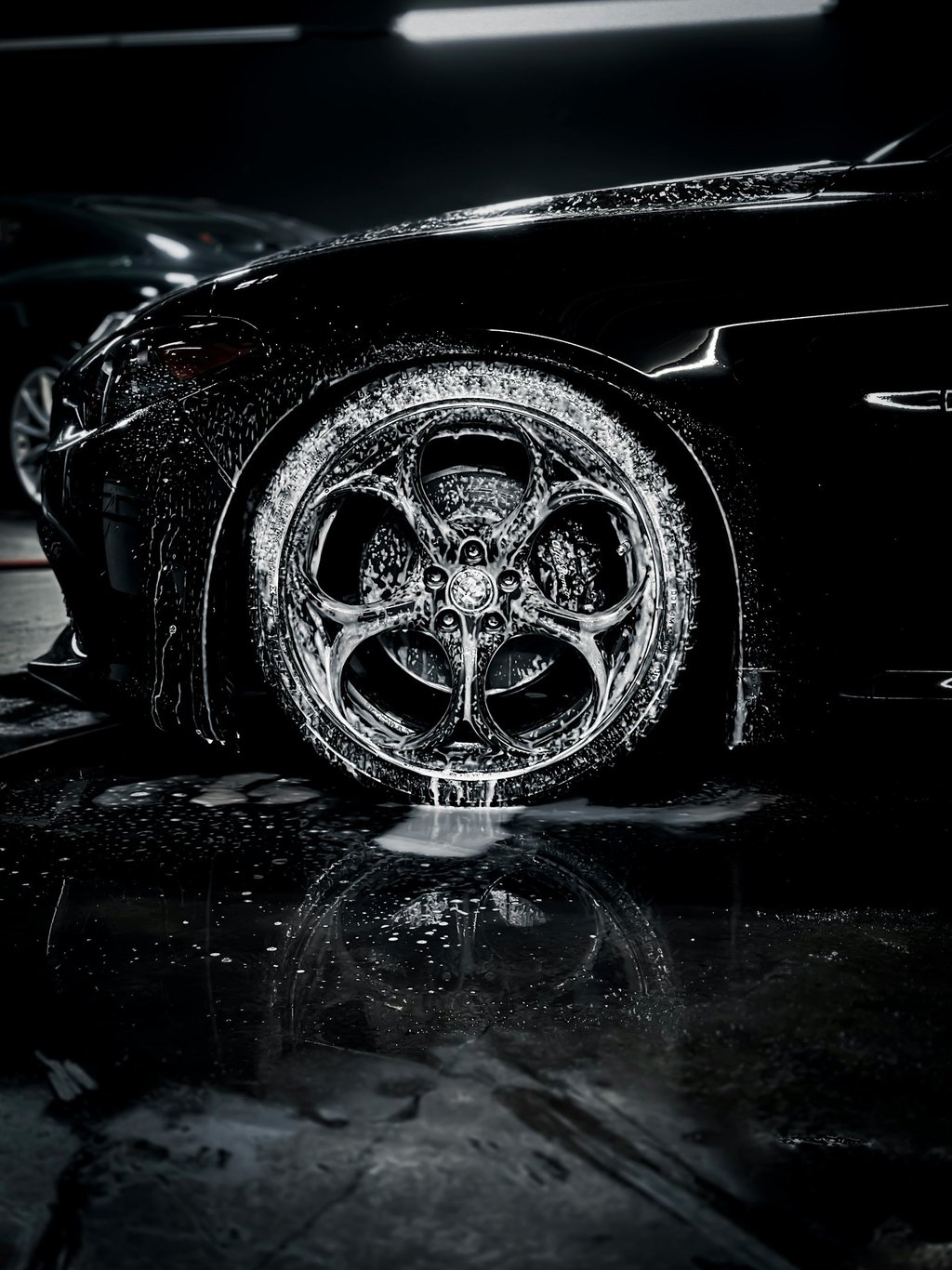
Most people approach car washing the same way they approach washing dishes — soap, water, and effort. The result is a vehicle that looks clean from a distance and reveals a web of fine circular scratches the moment direct light hits the paint. These swirl marks are not caused by dirt. They are caused by the process used to remove the dirt — abrasive mitts dragging grit across clear coat, dirty water being reintroduced to clean panels, and insufficient lubrication between the wash medium and the paint surface.
Professional detailing is not more effort applied to the same process. It is a fundamentally different process — one built around contamination isolation, chemical lubrication, and systematic surface protection. This guide outlines the exact foundational gear and technical methods our team uses to maintain and restore vehicle surfaces to a professional standard, and why each component in the system exists.
The Foundation: The Two-Bucket Contamination Isolation System
The most common cause of paint degradation in DIY detailing is cross-contamination — the process of picking up abrasive particles from the paint surface with a wash mitt, dunking the mitt back into the soap bucket, and immediately reapplying those particles to the next panel. Every pass of a contaminated mitt drags grit across your clear coat. Over dozens of washes, these micro-abrasions accumulate into the swirl mark pattern visible under direct light on virtually every self-washed vehicle.
The two-bucket system eliminates this failure point entirely through a simple contamination isolation protocol.
The Setup: Fill the first bucket with pH-neutral car wash soap diluted to the manufacturer's ratio — this is your Wash bucket. Fill the second bucket with clean plain water — this is your Rinse bucket. Place a grit guard insert at the bottom of each bucket before filling.
The Grit Guard Function: The grit guard is a raised plastic grid that sits at the base of the bucket and creates a physical barrier between the clean water above and the bottom of the bucket where dislodged grit accumulates. When you scrub your wash mitt against the grit guard in the Rinse bucket, the abrasive particles are knocked off the mitt and fall below the guard where they cannot be reintroduced to the mitt on the next dip.
The Execution Protocol: Load the mitt from the Wash bucket and wash one panel at a time from the roof down — roof, glass, hood, trunk, upper doors, lower doors, front and rear bumpers, then wheels last. After each panel, scrub the mitt firmly against the grit guard in the Rinse bucket. Wring out the mitt completely. Then reload it from the Wash bucket for the next panel. You are never putting a dirty mitt back into your soap water and you are never reintroducing the grit you just removed back onto the paint.
The Lubrication Requirement: The pH-neutral car wash soap is not optional — it is the lubrication layer that allows the mitt to glide across the paint rather than drag. Dish soap and household cleaners strip this lubrication and will simultaneously strip any existing paint protection. pH-neutral formula ensures the soap cleans without chemically attacking the clear coat or wax layer beneath it.
Interior Precision: The Systematic Dry Extraction Protocol
Interior care fails when liquid chemistry is introduced before dry particulate has been fully removed. Spraying a dashboard cleaner onto a dusty surface turns dust into a paste that embeds deeper into the plastic texture and becomes significantly harder to remove. Every interior detail must begin with a systematic dry extraction phase before any liquid touches the cabin.
The Vent Decontamination: AC vents are the highest-priority interior surface and the most neglected. Compressed dust in the vent slats recirculates directly back into the cabin air every time the system runs. Use a narrow-profile detailing brush to work through each slat systematically — short flicking strokes from top to bottom, dislodging the compacted dust column rather than pushing it deeper. Vacuum immediately behind each vent before moving to the next.
The Dashboard and Trim Sweep: Work from the top of the dashboard downward using a wide soft-bristle detailing brush so that dislodged dust falls to lower surfaces and ultimately to the floor mats for vacuum extraction. Pay particular attention to the recessed areas around buttons, dial bases, speaker grilles, and trim gaps where dust compacts over time into a visible dark crust.
The GSM Standard: When wiping interior surfaces after applying any cleaner or protectant, the towel specification matters. A high GSM — Grams per Square Meter — rating indicates a deeper, denser pile that absorbs liquid rather than pushing it across the surface. Low-GSM budget microfiber towels smear product and can scratch piano-black trim and gloss interior panels. A minimum 400 GSM edgeless microfiber towel is the professional standard for all interior surface work.
Surface Protection: The Hydrophobic Seal Protocol
Washing removes contamination. Sealing protects the clean surface from immediately accumulating new contamination. An unsealed clear coat is a porous surface that absorbs water, traps airborne pollutants, and bonds with iron fallout from brake dust within days of being cleaned. A properly sealed surface is hydrophobic — water beads and rolls off rather than sheeting across the paint and leaving mineral deposits as it evaporates.
The Drying Aid Method: The most efficient sealant application for a weekly or bi-weekly maintenance detail is deploying a spray sealant as a drying aid on a wet panel. While the car is still dripping from the final rinse, spray the sealant lightly across one panel at a time and dry immediately with the drying towel. The sealant bonds to the clean clear coat as the water is pulled off — protection and drying in a single pass.
The Drying Towel Specification: A twisted loop microfiber drying towel is specifically engineered for this application. The twisted pile structure creates channels that pull water away from the surface through capillary action rather than pushing it across the paint under pressure. Lay the towel flat across the hood, grab the near edge, and pull it toward you in a single slow pass. The towel's mass does the work. One pass per panel, flip to a dry face for the next panel.
The Synthetic Sealant Advantage: Modern synthetic polymer sealants provide significantly longer durability and stronger hydrophobic performance than traditional carnauba wax. Where a carnauba wax may last 4 to 6 weeks under regular driving conditions, a quality synthetic sealant applied correctly to a properly decontaminated surface lasts 3 to 6 months. The key variable is surface preparation — a sealant applied over oils, clay lubricant residue, or an uncleaned surface bonds to the contamination rather than the clear coat and fails proportionally faster.
The Expert Gear List
To achieve the results outlined in this guide, our team deploys the following professional-grade gear. All items are available on Amazon.
Disclosure: The Retrofit Routine is a participant in the Amazon Services LLC Associates Program. As an Amazon Associate, we earn from qualifying purchases at no additional cost to you.
External Wash Systems
Chemical Guys Heavy Duty Detailing Bucket: A rugged, wide-mouth 5-gallon bucket engineered for long-term chemical exposure in professional wash environments. The structural foundation of the two-bucket contamination isolation system. Wide mouth allows full mitt submersion and aggressive scrubbing against the grit guard insert without restriction.
Chemical Guys Cyclone Dirt Trap: The technical standard for contamination isolation in the two-bucket system. The cyclone fin design creates a turbulent barrier at the base of the bucket that suspends dislodged grit below the guard surface and prevents it from being reintroduced to the wash mitt on the next dip.
Meguiar's Gold Class Car Wash: A high-lubricity, pH-neutral car wash soap formulated to provide the critical lubrication layer that allows the wash mitt to glide across the paint surface rather than drag. The pH-neutral formula protects existing paint sealants and wax layers throughout the wash process without chemical stripping.
Interior & Precision Tools
Nurkul Detailing Brush Set, 11-Piece: A complete set of soft and medium-bristle detailing brushes in multiple sizes covering every geometry in the vehicle cabin — wide flat brushes for dashboard sweeping, narrow pointed brushes for vent slat decontamination, and small round brushes for button recesses and speaker grilles. The full set eliminates the temptation to use a single oversized brush that cannot effectively reach tight areas without pushing contamination deeper.
The Rag Company - Eagle Edgeless 500 GSM Microfiber: The professional consumable standard for both interior surface work and exterior sealant buffing. 500 GSM pile weight provides the liquid absorption needed to properly level protectants and pull moisture off paint without smearing. Edgeless construction eliminates the risk of edge-induced scratching on piano-black trim, gloss interior panels, and freshly sealed clear coat throughout every phase of the detail.
Finishing & Protection
Mighty Cleaner Premium XL Shammy Towel: A professional-grade drying tool engineered for rapid, high-capacity water extraction. This extra-large 34”x25” PVA shammy absorbs up to 10x its weight in water, allowing you to dry an entire vehicle in minutes without the friction of traditional towels. It is highly durable, reusable, and provides a streak-free, scratch-free finish that is mandatory for preventing water spots and mineral buildup after a contact wash.
P&S Bead Maker Paint Protectant: The most efficient synthetic sealant for a residential driveway detail. Applied as a spray sealant drying aid to a clean, wet panel, it bonds directly to the clear coat as the panel is dried — delivering a high-gloss hydrophobic barrier and extreme water beading performance in a single application step. No separate wax or sealant stage required. Compatible with all modern paint systems and safe for use over existing ceramic coatings as a maintenance layer.
Contact
Questions? Reach out anytime, we’re here.
© 2026. All rights reserved.
Disclosure
The Retrofit Routine is a participant in the Amazon Services LLC Associates Program. As an Amazon Associate, we earn from qualifying purchases at no additional cost to you.
The Retrofit Routine is a digital property owned and operated by Atlantic Delivery Drivers Corp.