
The Garage Door Thermal Seal: Weatherstripping & Bottom Seal Replacement Protocol
Your garage door is the largest single opening in your home's thermal envelope — and the worst-sealed. Here is the exact bottom seal, perimeter weatherstrip, and threshold gasket protocol to permanently close the gap between your conditioned living space and the uncontrolled exterior.
THE RETROFIT
8 min read
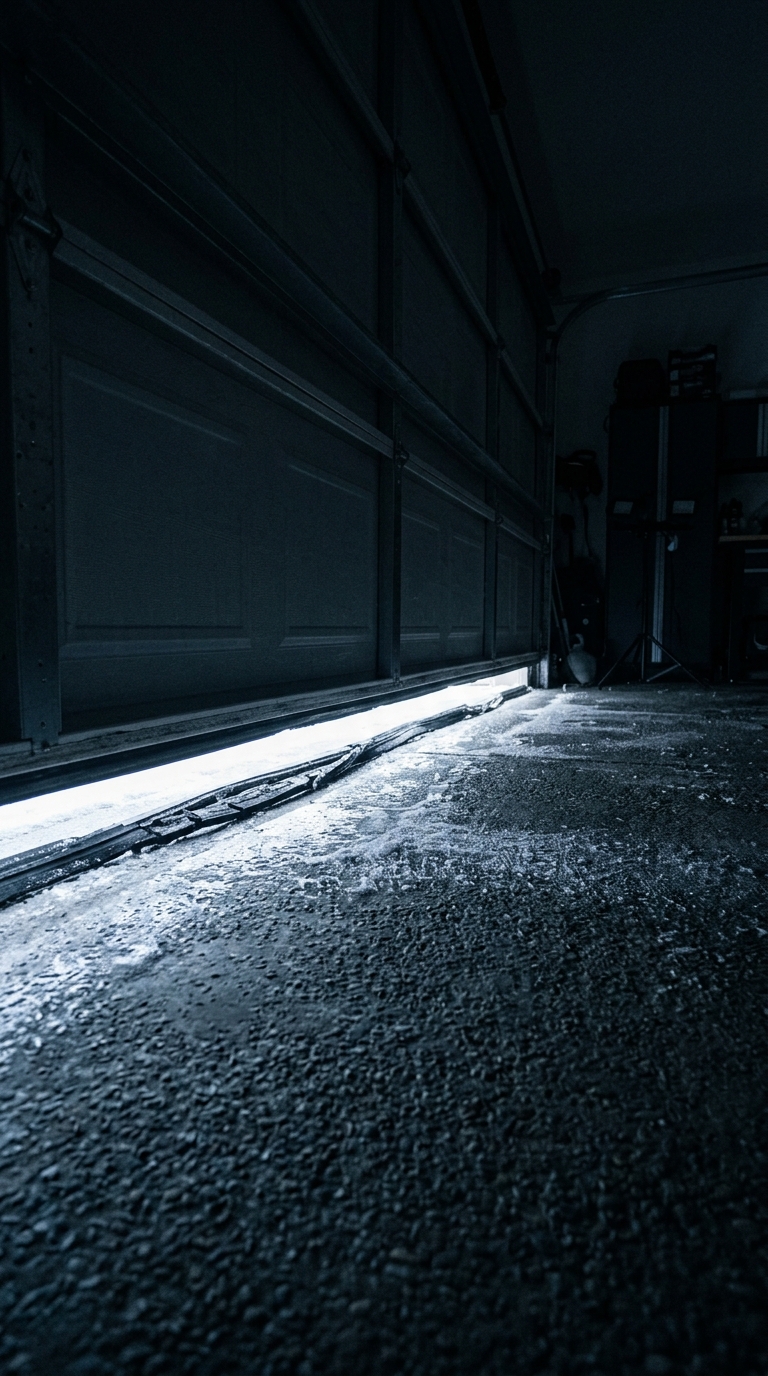
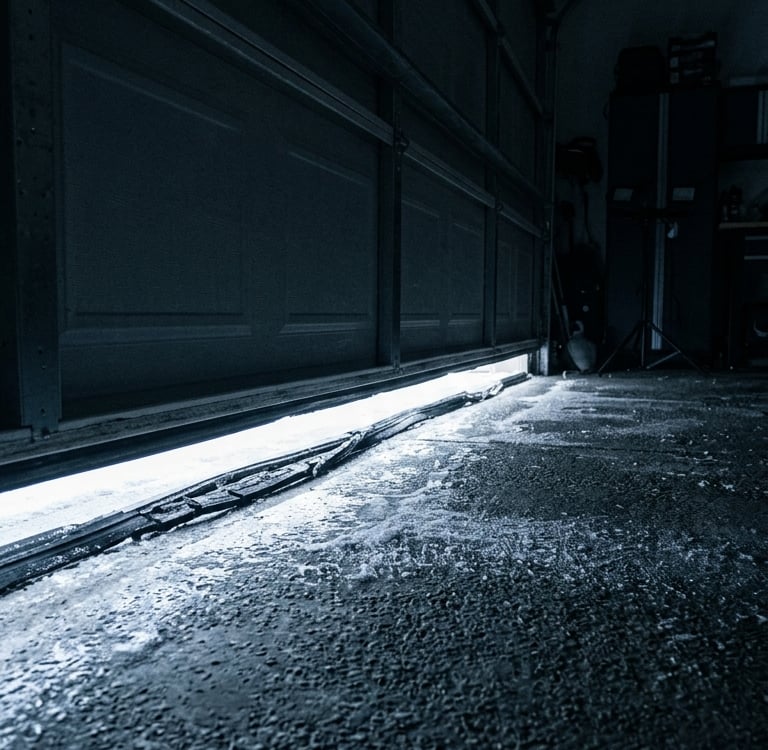
Most homeowners spend an afternoon sealing window drafts, caulking door frames, and insulating the attic hatch — and then leave a nine-foot-wide structural gap at the base of their garage door that undoes all of it. A standard two-car garage door is the single largest penetration in the home's thermal envelope. When the bottom seal degrades — typically within five to seven years of installation under standard UV and concrete contact — that nine-foot gap allows unconditioned air to freely exchange with whatever space sits behind it, whether that is a finished garage, a utility room, or a lower level directly adjacent to conditioned living space.
The financial math on ignoring this is direct. If your garage shares a wall with a bedroom, kitchen, or finished basement, the temperature in that space is being actively dragged toward exterior conditions every hour the seal fails. Your HVAC system compensates by running longer cycles. In a home with a heat pump on a multi-level layout, a failed garage door seal can be the hidden variable driving a $40 to $80 monthly utility overage that no amount of thermostat adjustment resolves.
The replacement hardware costs under $60. The installation requires no special tools and under two hours of work. The ROI on this protocol is immediate and permanent. This guide is the exact three-phase weatherstripping replacement and threshold sealing system our team deploys to close the garage door thermal breach completely.
Phase 1: The Diagnostic Pass — Mapping the Breach Points
A garage door has four distinct sealing zones, each of which degrades at a different rate and requires a different product to address. Treating only the bottom seal while ignoring a failed perimeter strip wastes half the effort and leaves the thermal breach partially open.
The Four Seal Zones: The bottom seal sits between the door panel and the concrete floor and takes the most physical abuse — UV degradation from sunlight, compression from the door closing, and direct contact with road salt and moisture tracked in from vehicles. The perimeter weatherstrip is the rubber or vinyl flange that runs up both side jambs and across the top header, creating a compressed seal against the door panel when it is fully closed. The threshold seal is a floor-mounted rubber gasket bonded to the concrete that the bottom seal presses against, creating a double compression barrier at the base. The door panel seals are the rubber gaskets between individual door panels that prevent air infiltration through the door itself on older sectional garage doors.
The Light Test: Wait for a bright midday with the garage interior darkened. Close the garage door completely and stand inside with the lights off. Any active breach point will show as a visible band of daylight. Run this test along the full perimeter — both side jambs from floor to header, across the top, and along the full length of the bottom seal. Mark every light-visible gap with a piece of painter's tape on the door panel face before opening the door. This is your breach map and it dictates exactly which sealing components require replacement.
The Compression Test: For the bottom seal specifically, close the door and attempt to slide a sheet of standard printer paper beneath it at multiple points along its width. If the paper slides freely with zero resistance, the seal has lost its compression capacity entirely. If the paper slides with slight drag but does not hold firm, the seal is marginal and will fail within one season. A properly functioning bottom seal will grip the paper firmly enough that sliding it requires meaningful resistance. Any zone where the paper slides freely is an active air infiltration point.
The Physical Inspection: Open the door and examine the bottom seal directly. A degraded bottom seal will show cracking, brittleness, and visible compression deformation — it will be flat rather than maintaining its original T-slot or bulb profile. The perimeter weatherstrip will show similar cracking and may have pulled away from the jamb channel in sections, leaving visible gaps between the rubber and the door frame. These physical indicators confirm the compression test findings and guide the replacement sequence.
Phase 2: The Bottom Seal Replacement Protocol
The bottom seal is the highest-priority replacement because it represents the largest single breach point and experiences the most severe degradation. The replacement process requires no special tools and takes approximately thirty minutes for a standard two-car door.
Bottom Seal Type Identification: Before purchasing replacement material, identify the retention system your door uses. The two standard systems are the T-slot retainer — where the seal slides into an aluminum channel bolted to the base of the door panel — and the nail-on or staple-on retainer, where the seal flange is fastened directly to the door panel face. The T-slot system is the professional standard on modern sectional doors and allows the seal to be replaced by sliding the new material into the channel without any fasteners. The nail-on system is common on older wood and steel doors and requires removing the existing staples or nails before the new seal can be installed. Measure the width of your door precisely before purchasing — standard residential garage doors are eight, nine, ten, or sixteen feet wide, and the seal must be cut to length with a utility knife before installation.
The Extraction: Raise the door to approximately waist height to access the bottom panel comfortably. For a T-slot system, locate the open end of the aluminum retainer channel — typically at one side jamb — and slide the existing seal out horizontally along the channel. If the seal has been in place for many years it may have swollen or cracked and resist sliding. Work a flathead screwdriver gently under the seal lip to free it from the channel walls before pulling. For a nail-on system, use pliers and a flathead to extract the existing fasteners along the full width of the panel before peeling the old seal away from the door face.
Surface Preparation: Before installing the new seal, clean the retainer channel or door face completely. Years of road dirt, salt, and moisture accumulate in the T-slot channel and prevent the new seal from sliding freely or seating correctly. Use a stiff detailing brush and a paper towel dampened with isopropyl alcohol to wipe the full interior of the channel before installation. A clean channel ensures the new seal slides to the correct position and maintains uniform compression across the full width of the door.
The New Seal Installation: For a T-slot system, feed one end of the new seal into the open end of the retainer channel and slide it progressively across the full width of the door, maintaining uniform insertion depth as you go. The seal should slide with light resistance rather than binding — if it catches at any point, back it up slightly and reposition rather than forcing it, which can tear the seal flange before it is fully seated. Once fully installed, verify that the seal extends equally beyond both ends of the retainer channel and trim flush with a sharp utility knife. For a nail-on system, position the new seal flange against the door face and fasten with galvanized roofing nails or heavy-duty staples at six-inch intervals along the full width.
The Threshold Gasket: If the light test revealed persistent gaps along the base of the door even with the bottom seal in contact with the concrete — which is common on uneven garage floors and sloped concrete aprons — the threshold gasket is the solution. This is a rubber extrusion that bonds directly to the concrete floor along the inside face of the door opening using contact adhesive. When the door closes, the bottom seal contacts the threshold gasket rather than bare concrete, creating a double-compression seal that compensates for floor irregularities that a bottom seal alone cannot bridge. Apply the threshold gasket only after the bottom seal replacement is complete and you have verified that gaps remain through a second light test.
Phase 3: The Perimeter Weatherstrip Replacement
With the bottom seal locked down, the perimeter weatherstrip addresses the side jamb and header seal points that the light test revealed as secondary breach locations.
The Perimeter Strip Removal: Starting at the base of one side jamb, pull the existing weatherstrip away from the door frame. On most residential installations the perimeter strip is held in place by the same aluminum retainer channel system as the bottom seal, or by a series of staples or nails through the flange into the wood jamb. Work progressively upward and across the header, pulling the old strip away from the frame and noting which sections show the heaviest degradation. These are the sections where the door panel has been making lightest contact due to frame settling or door alignment drift — a factor that will need to be addressed by adjusting the door's limit and travel settings if the gap is structural rather than just a worn seal.
The Replacement Installation: Modern perimeter weatherstrip for residential garage doors is sold as a pre-cut kit or as continuous roll stock that is cut to length on-site. The professional standard is the bulb-type perimeter strip — a flexible vinyl or rubber flange with a circular or D-profile compression bulb along its edge that deforms when the door contacts it, creating a conformal seal that accommodates minor surface irregularities in the door panel face. Feed the new strip into the retainer channel starting at the base of one jamb, working upward and across the header in a single continuous installation, and trim the excess at the base of the opposite jamb. The compression bulb should make uniform contact with the door panel face when the door is fully closed — verify by running your hand along the exterior face of the closed door at the jamb line and feeling for any zones where the bulb has not made contact.
The Final Verification Pass: Close the door completely and repeat the interior light test. Every breach point marked in Phase 1 should now be fully blocked. No daylight should be visible along any sealing zone. If residual light is visible at any point along the perimeter strip, adjust the position of the retainer channel slightly inward toward the door panel face at that location to increase compression before the final fastening pass. The compression test at the bottom seal should now show firm resistance to paper sliding at every point across the full width of the door. If the threshold gasket was installed, verify that its bonded seam to the concrete is complete and that no section has lifted along its length.
The Expert Gear List
To execute this complete garage door thermal sealing protocol, our team deploys the following professional-grade materials. All items are available on Amazon.
Disclosure: The Retrofit Routine is a participant in the Amazon Services LLC Associates Program. As an Amazon Associate, we earn from qualifying purchases at no additional cost to you.
Bottom Seal Replacement
Jin&Bao 5/16" T‑End Garage Door Bottom Seal (16 ft): A heavy‑duty T‑end replacement seal engineered to restore a tight, weatherproof barrier between the garage door and the concrete floor. The flexible EPDM rubber profile compresses evenly along the full width of the door, helping compensate for minor surface irregularities, hairline cracks, and small dips that allow light, drafts, dust, or pests to enter with worn‑out factory seals.
M-D Building Products Heavy Duty Rubber Threshold Seal: The floor-mounted double-compression barrier for garage floors with surface irregularities, cracks, or sloped concrete aprons that a bottom seal alone cannot fully bridge. Bonds directly to the concrete using contact cement and creates a raised rubber gasket along the full width of the door opening. When the door closes, the bottom seal contacts the threshold gasket rather than bare concrete — the two compression surfaces working together eliminate every residual gap that a single seal cannot address independently.
Perimeter Weatherstripping
Frost King Bulb Garage Door Top and Side Seal Kit: A complete perimeter sealing kit containing pre-cut side and header sections with a D-profile compression bulb designed for the exact pressure and deflection pattern of a standard residential sectional garage door. The bulb compresses uniformly against the door panel face at every point of contact, creating a conformal air barrier that accommodates the minor panel surface variations common in aging aluminum and steel doors. Installs into the existing retainer channel or fastens directly to the wood jamb on older construction.
Diagnostics & Installation
Black+Decker Thermal Leak Detector: The precision infrared diagnostic tool for identifying the exact thermal breach points before any replacement material is purchased. Maps the temperature differential between the sealed perimeter and the active infiltration gaps with a visual display that confirms which seal zones are failing and which are still functional — ensuring you replace only what the data indicates rather than replacing the entire system by default. The same instrument used in the Window Insulation Protocol across this guide library.
DeWalt Retractable Utility Knife: The mandatory cutting tool for trimming both the bottom seal and perimeter strip to exact length. A dull blade compresses and tears rubber seal material rather than cutting it cleanly, leaving a ragged end that gaps at the jamb rather than making flush contact. A fresh blade in a rigid, lock-position utility knife produces the factory-square cut required for a clean terminus at both jamb bases.
Contact
Questions? Reach out anytime, we’re here.
© 2026. All rights reserved.
Disclosure
The Retrofit Routine is a participant in the Amazon Services LLC Associates Program. As an Amazon Associate, we earn from qualifying purchases at no additional cost to you.
The Retrofit Routine is a digital property owned and operated by Atlantic Delivery Drivers Corp.