
The Hot Tub Foam Protocol: Why Your Spa is Foaming and How to Eliminate It Permanently
Foam in your hot tub is not a cosmetic nuisance. It is a water chemistry signal. Here is the exact diagnosis and elimination protocol that addresses the source — not just the symptom.
THE ROUTINE
6 min read
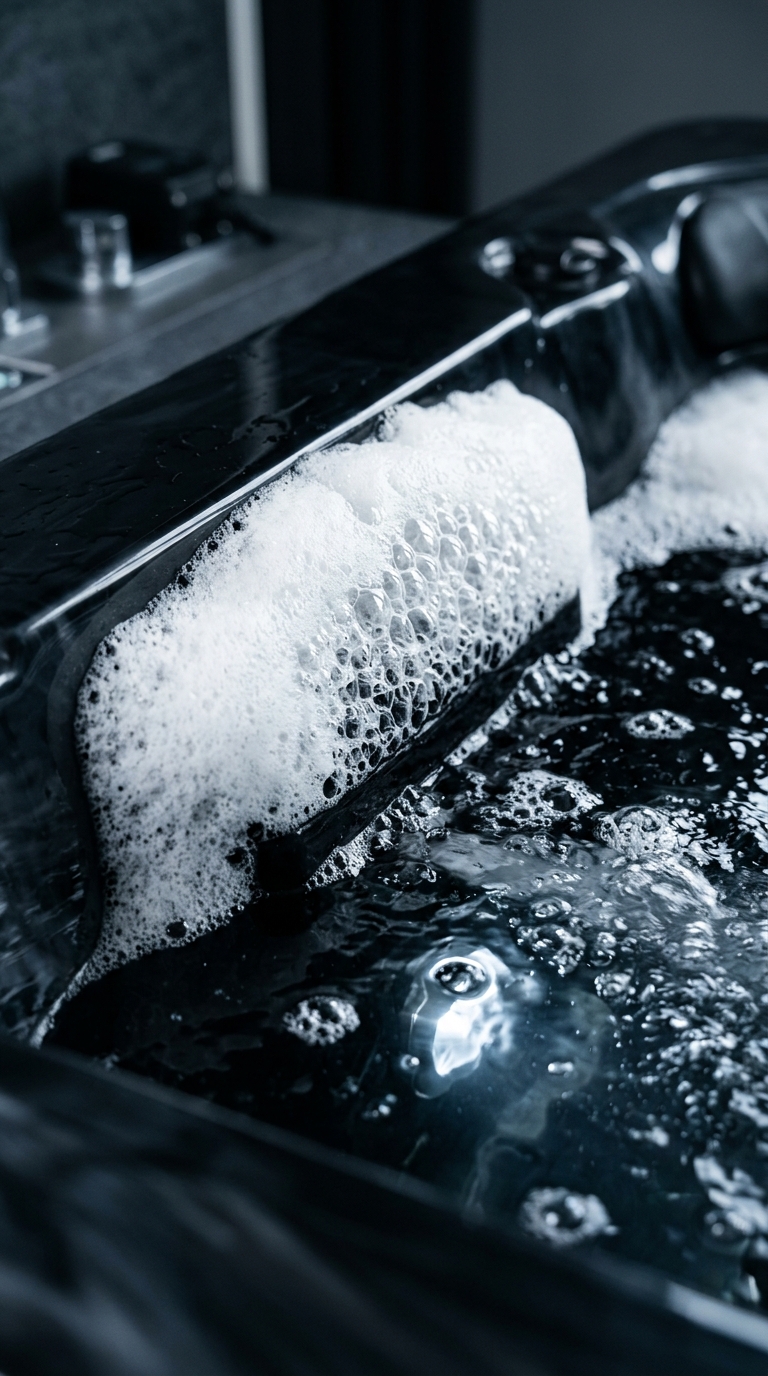
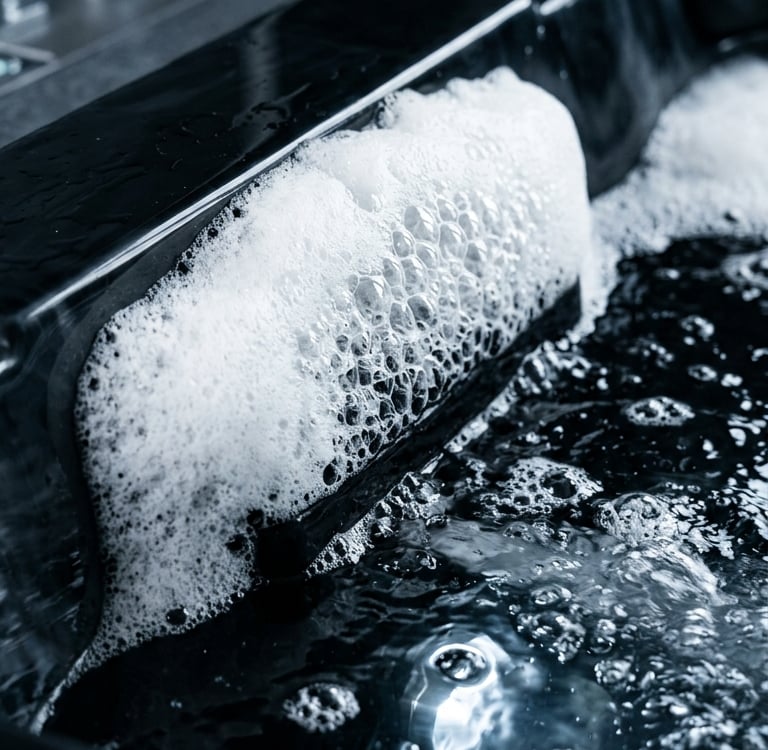
Foam on hot tub water is one of the most common and most misunderstood spa problems. Most owners treat it by skimming it off, running the jets harder, or adding a defoamer and waiting for it to disappear. The foam disappears. Then it comes back within 24 to 48 hours. The cycle repeats until the owner either accepts it as normal or drains the tub in frustration.
Foam is not a product problem. It is a contamination and surface tension problem. Specifically it is the visible result of dissolved organic compounds in the water — surfactants from soaps, shampoos, body washes, lotions, cosmetics, deodorants, and natural body oils — lowering the surface tension of the water to the point where agitation from the jets produces stable bubbles that do not collapse on contact. The foam you see on the surface is a physical measurement of the organic load your filtration and sanitizer system have not yet processed out of the water.
Understanding the source of the foam is what determines whether a defoamer is a permanent fix or a 48-hour delay before the next episode.
Phase 1: Diagnosing the Foam — Source Identification Before Treatment
Not all foam is produced by the same cause and the correct response depends on accurate source identification. Treating a TDS foam problem with defoamer alone is a temporary fix. Treating a low-calcium problem by draining is unnecessary. Diagnose before you dose.
Surfactant Foam — The Most Common Cause: Foam produced by soaps, body products, and organic bather waste is the most common type and is identifiable by its white or off-white colour, dense stable bubble structure, and tendency to accumulate at the waterline and around the jets. It appears or worsens shortly after a use session and is most pronounced in tubs used by multiple bathers without a pre-soak rinse protocol. This is the foam that a defoamer addresses directly and effectively.
Low Calcium Foam: Water with very low calcium hardness — below 100 ppm — can produce a thin, fine-bubble foam even without high surfactant load. This foam is typically lighter and less stable than surfactant foam and appears even between use sessions. If your test readings show calcium hardness below 150 ppm alongside foaming, treat the hardness deficiency first with a calcium hardness increaser before relying on defoamer as a solution.
High TDS Foam: Total dissolved solids accumulate in hot tub water over the life of a fill as chemicals are added, bather waste dissolves, and evaporation concentrates everything that does not evaporate along with the water. When TDS reaches a critical level — typically after three or more months without a water change — the water becomes chemically saturated and foam becomes persistent regardless of chemical treatment. A defoamer will reduce visible foam temporarily but will not resolve high-TDS foaming. The correct fix is a full drain and refill.
New Fill Foam: Some tap water in certain regions contains elevated levels of dissolved minerals or treatment chemicals that produce transient foam during the first 24 to 48 hours after a fill. This foam dissipates on its own as the water equilibrates and the filtration system processes the initial dissolved content. No treatment required — allow the system to circulate for 48 hours before diagnosing a foam problem on a fresh fill.
Phase 2: The Defoamer Protocol — Immediate Elimination
A spa defoamer works by breaking the surface tension of the foam bubbles, collapsing them immediately and preventing new bubbles from stabilizing at the surface. It is the correct immediate-response treatment for any active surfactant foam situation and the correct maintenance product for high-use spas where bather load makes periodic foam formation inevitable.
Immediate Response Dose: When active foam is present, add a maintenance dose of spa defoamer directly to the water with the jets running at the recommended rate for your tub's volume. Results are visible within minutes — the foam will collapse and the surface will clear. Do not overdose defoamer in a single application. Defoamer is a silicone-based compound that itself becomes a dissolved organic if over-applied, eventually contributing to the contamination load rather than reducing it.
The Correct Dose Rate: For a standard residential hot tub in the 300 to 500 gallon range, a maintenance dose is typically one to two capfuls of defoamer applied directly to the surface with jets running. Apply near a jet return to ensure rapid distribution. Do not add defoamer to the filter housing or skimmer — it will coat the filter media and reduce filtration efficiency.
Post-Application Protocol: After applying defoamer, allow the tub to run for 20 to 30 minutes with the cover off before replacing the cover. The defoamer works at the surface and the agitation from the jets disperses it through the water column. Replacing the cover immediately after application traps any off-gassing and can produce a temporary chemical odour inside the tub.
The Size Selection: For high-use spas — accessed four or more times per week by multiple bathers — the 32oz format in a two-pack is the correct volume purchase. Defoamer is a consumable maintenance product in a high-use spa and running out mid-season is a planning failure rather than a product failure. For lower-use spas accessed once or twice per week by one or two people, the 16oz single bottle is adequate for a full season with appropriate use.
Phase 3: The Prevention Protocol — Eliminating the Source
A defoamer eliminates foam. A prevention protocol eliminates the need for defoamer. Both belong in a complete hot tub maintenance system — defoamer for immediate response, prevention protocols to reduce the frequency and severity of foam episodes.
The Pre-Soak Rinse: The single highest-impact prevention protocol is a quick shower or rinse before entering the hot tub. Removing body lotions, oils, hair products, and deodorant residue before entering eliminates the primary surfactant load that produces foam. In a high-capacity household where five or more people use the spa regularly, this single protocol reduces foam episodes more significantly than any chemical treatment. It takes 90 seconds and costs nothing.
Swimwear Management: Swimwear washed with standard laundry detergent contains residual surfactant that releases into the spa water during use. Rinse swimwear in clean water before entering the spa, or designate specific spa swimwear that is rinsed rather than machine washed between uses. This is a particularly significant foam contributor in households where children use the tub in swimwear that has been washed multiple times in standard detergent.
The Weekly Enzyme Dose: A natural enzyme treatment added weekly breaks down the dissolved organic compounds that accumulate in the water between drain cycles. Enzymes do not replace defoamer for active foam situations but they reduce the rate of organic accumulation that drives chronic foaming in high-use spas. A weekly enzyme dose as part of the standard maintenance cadence alongside shock treatment significantly extends the interval between drain-and-refill cycles and keeps the base water quality higher between weekly chemistry corrections.
The 90-Day Drain Discipline: No prevention protocol and no defoamer will maintain clean water indefinitely. The 90-day drain and refill is the final and non-negotiable foam prevention protocol. By the time water has been in a high-use spa for 90 days, the TDS level, dissolved organic load, and accumulated chemical byproducts have reached a concentration where foam is increasingly difficult to manage regardless of the products deployed. A clean refill with a properly executed first-fill protocol resets every variable simultaneously.
Phase 4: The High-Capacity Household Protocol
A hot tub used by six or more people multiple times per week requires a more aggressive foam management approach than a two-person spa used twice weekly. The bather load difference is not linear — six bathers introduce significantly more than three times the organic load of two bathers because the surfactant and oil contribution per person does not decrease with group size.
Increased Testing Frequency: In a high-capacity household, execute a post-use spot check on sanitizer levels and a visual foam assessment after every session involving four or more bathers. Do not wait for the weekly anchor test to identify a developing foam problem — by the time foam appears, the organic load has already been building for multiple sessions.
The Post-Session Maintenance Dose: After any heavy-use session, add a small maintenance dose of defoamer before replacing the cover regardless of whether visible foam is present. This proactive approach prevents the bubble structure from establishing rather than collapsing it after it forms. Combined with a post-session shock treatment to oxidize the organic load, this protocol keeps the water consistently cleaner between weekly chemical corrections.
The Proactive Drain Schedule: In a high-capacity household — five or more regular users, four or more sessions per week — consider a 60-day drain schedule rather than the standard 90-day interval. The higher bather load accumulates TDS and organic waste at a faster rate, and the water chemistry becomes increasingly difficult to maintain cleanly in the third month of a high-use fill.
The Expert Gear List
To execute complete hot tub foam management and prevention, our team deploys the following products. All items are available on Amazon.
Disclosure: The Retrofit Routine is a participant in the Amazon Services LLC Associates Program. As an Amazon Associate, we earn from qualifying purchases at no additional cost to you.
Foam Elimination
AquaDoc Hot Tub Defoamer: Fast-acting spa defoamer that breaks surface tension on contact, collapsing active foam within minutes and preventing new bubble formation. Compatible with all hot tub types and both chlorine and bromine sanitizer systems. Select the size that matches your household's use frequency — the 16oz for lower-use spas, the 32oz two-pack for high-use households running multiple sessions per week, and the 128oz bulk format for high-capacity households where defoamer is a consistent seasonal consumable rather than an occasional purchase.
Size Options:
Contact
Questions? Reach out anytime, we’re here.
© 2026. All rights reserved.
Disclosure
The Retrofit Routine is a participant in the Amazon Services LLC Associates Program. As an Amazon Associate, we earn from qualifying purchases at no additional cost to you.
The Retrofit Routine is a digital property owned and operated by Atlantic Delivery Drivers Corp.