
The Hot Tub Sanitizer Protocol: Choosing and Maintaining the Right Sanitizer System for Your Spa
Stop adding sanitizer by guesswork. Get the exact dosing logic, maintenance cadence, and clarity system to keep your hot tub water safe, clear, and chemically stable week after week.
THE ROUTINE
6 min read
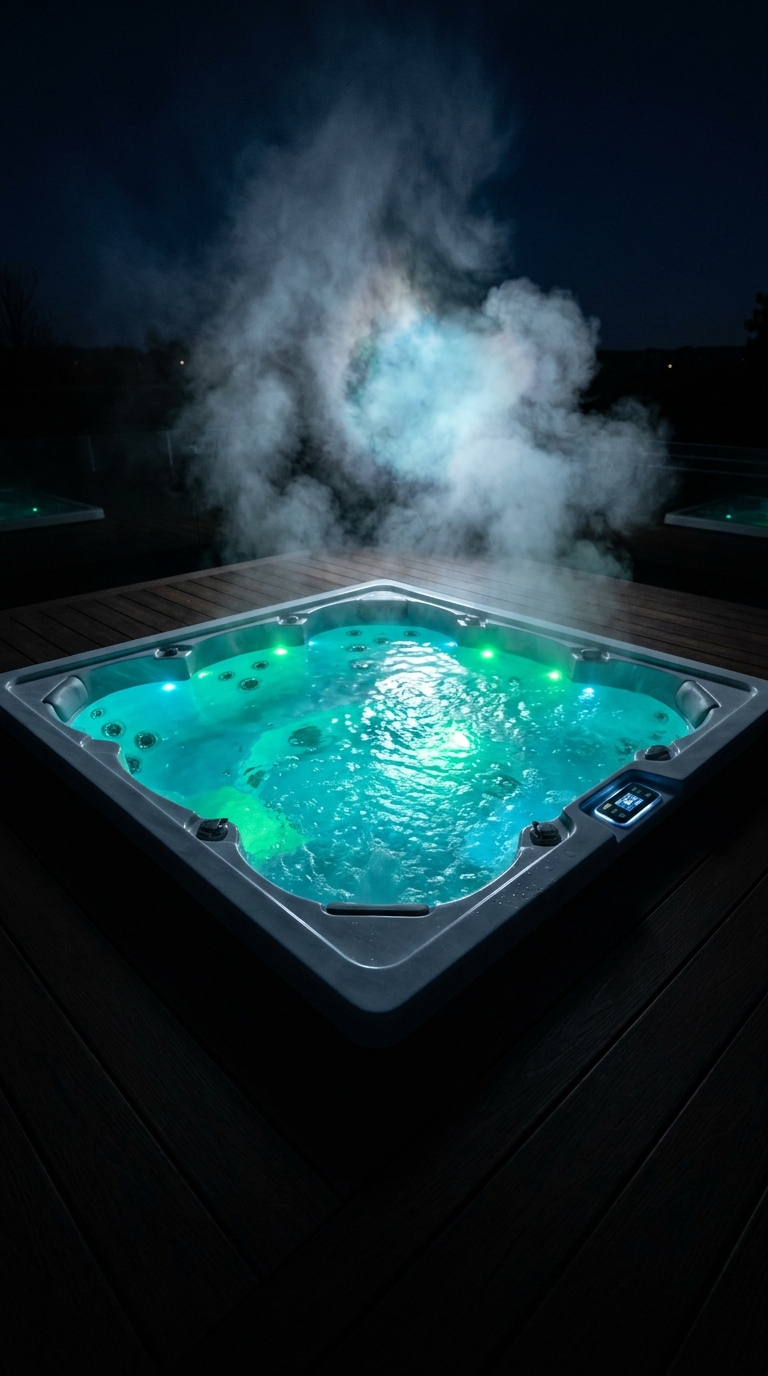
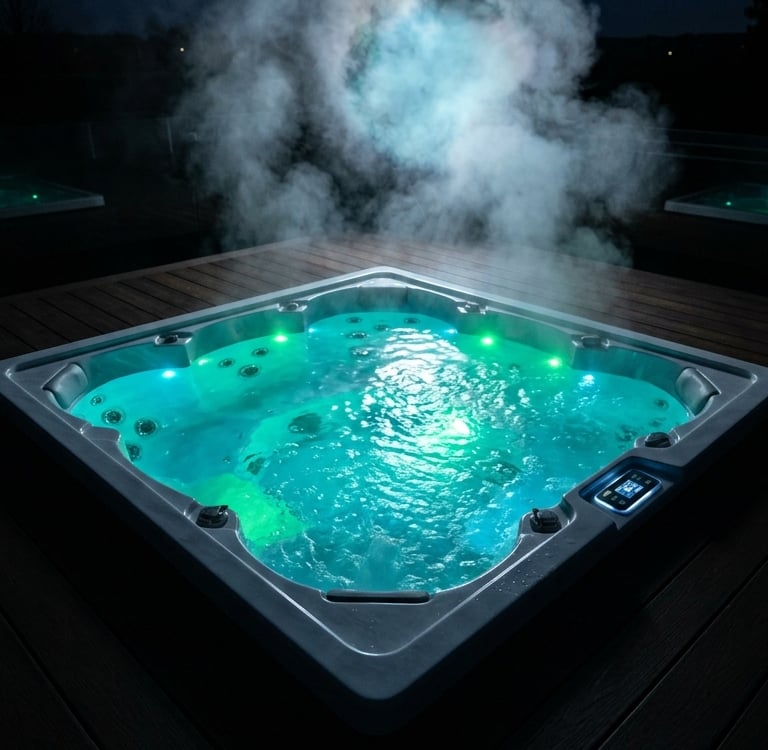
Most hot tub owners think water maintenance is about keeping the chlorine up. It is not. Sanitizer is only one variable in a system of interconnected parameters — and adding more of it without understanding how your specific sanitizer interacts with temperature, pH, bather load, and water volume is the fastest route to cloudy water, skin irritation, and a tub that smells like a public pool locker room despite being over-dosed.
The two primary sanitizer systems available for residential hot tubs are chlorine and bromine. They are not interchangeable, they do not perform equally in every environment, and switching between them mid-fill is a chemical error that forces a full drain to correct. This guide outlines the operational logic behind both systems, the exact maintenance dosing protocol for each, and the role of a water clarifier in keeping your sanitized water visually clear — because sanitized water and clear water are not always the same thing.
Phase 1: System Selection — Chlorine vs. Bromine
This decision is made once per water fill and must be committed to for the life of that fill. Bromine and chlorine cannot be mixed in active spa water. Bromine builds a reserve in the water that reacts with chlorine if introduced, creating a chemical imbalance that no amount of correction will fix cleanly. Pick your system before the first dose and stay with it until the drain.
The Chlorine System — Best For: High-frequency use households where the tub is being accessed four or more times per week. Chlorine sanitizes rapidly and burns off quickly, which means it responds well to heavy bather loads but requires more frequent dosing to maintain an active residual. It is also the correct choice for outdoor tubs exposed to UV radiation, where a stabilizer like cyanuric acid can be added to extend chlorine's active life in the water. The target maintenance range for a hot tub is 3 to 5 ppm — notably higher than a swimming pool because elevated water temperature accelerates chlorine consumption dramatically.
The critical operational rule with chlorine in a spa: you are always managing free chlorine, not total chlorine. The difference between the two readings on your test strips is your combined chlorine — the inactive chloramines formed when chlorine reacts with organic contaminants from bathers. A rising gap between total and free chlorine is your signal to shock the water, not add more sanitizer.
The Bromine System — Best For: Households where the tub runs at higher temperatures — consistently above 100°F — or where bathers have sensitive skin and eyes that react to chlorine. Bromine is chemically stable at high heat and maintains its sanitizing effectiveness across a wider pH range than chlorine, which means it is more forgiving of minor pH drift. It also does not produce the sharp chemical odor associated with chloramines. The tradeoff is a more complex activation sequence and the requirement to maintain a sodium bromide reserve in the water at all times.
The bromine maintenance range is 3 to 5 ppm, identical to chlorine, but the mechanism is different. Bromine does not simply add to the water and sanitize on contact. It requires an active bromine bank — a concentration of sodium bromide ions in the water — that gets continuously activated by the addition of oxidizer or a small maintenance dose of non-chlorine shock. Without a maintained bromine bank, your bromine readings will drop to zero within 24 hours of tablet dissolution regardless of how many tablets are in the dispenser.
Phase 2: The Dosing Protocol — Chlorine System
Chlorine granules are the correct form factor for spa sanitization — not tablets, not liquid, not sticks. Granules dissolve completely within minutes and allow precise dose control without the slow-release unpredictability of tablet erosion rates, which vary based on water flow, temperature, and tablet size.
The Startup Dose: At the beginning of a fresh fill with balanced pH and alkalinity, add chlorine granules at the rate specified on your product packaging for your tub's water volume. For most residential hot tubs in the 200 to 400 gallon range this typically means 1 to 2 tablespoons of granular chlorine to reach an initial reading of 3 to 5 ppm. Always pre-dissolve granules in a cup of warm water before distributing evenly around the perimeter of the tub with jets running. Never add granules directly to the skimmer or filter housing.
The Maintenance Dose: Test free chlorine every 48 hours or after any session involving three or more bathers. Add a maintenance dose of granules when readings drop below 2 ppm. Do not wait for the reading to hit zero — at that point the water has been unprotected for an unknown period and biological contamination may already be present. A 10-minute circulation window after dosing before re-entry is the minimum safe interval.
The Shock Cycle: Shock the water weekly with a non-chlorine oxidizer regardless of your free chlorine reading. This is not about raising sanitizer levels — it is about oxidizing the accumulated chloramines and organic waste that active chlorine cannot eliminate on its own. A weekly shock keeps the water from developing the combined chlorine odor and maintains the efficiency of your free chlorine residual. Run the jets with the cover off for 20 minutes after shocking to allow off-gassing before replacing the cover.
Phase 3: The Dosing Protocol — Bromine Tablet System
The Bromine Reserve Establishment: This step is non-negotiable and must be completed before the first bromine tablet is added. Add sodium bromide granules at the rated dose for your water volume with jets running. This charges the water with the bromide ion bank that the subsequent oxidizer will activate. Without this step your bromine tablets will dissolve without producing measurable sanitizer. Allow 30 minutes of circulation.
The Tablet Loading: Load bromine tablets into a dedicated floating dispenser or the tub's filter housing — never directly into the water or the skimmer basket. The tablet erosion rate should be calibrated so your bromine reading holds between 3 and 5 ppm between test intervals. Start with a half-loaded dispenser and adjust based on your weekly readings rather than guessing at a full load from the first day.
The Activation Shock: After loading the tablets, add a maintenance dose of non-chlorine shock to activate the bromide bank. This initial activation brings the bromine reading from zero to the operating range within one to two hours. From this point forward the tablets maintain the reserve and the weekly shock cycle keeps the bank active and the water oxidized.
The Weekly Reactivation: Unlike chlorine, bromine benefits from a regular low-dose shock even when sanitizer readings appear adequate. The shock activates the bromide bank, which converts back to active sanitizer and extends the effective life of each tablet cycle. A bromine system that is shocked weekly will maintain measurably more stable sanitizer readings than one that is only shocked reactively when readings drop.
Phase 4: Water Clarity — The Role of Clarifier
Sanitized water is not always visually clear water. A hot tub can have adequate chlorine or bromine readings and still appear cloudy, hazy, or milky. This is because sanitizer eliminates biological contamination but does not address the suspended microscopic particles — dead skin cells, body oils, cosmetics, lotion residue, and fine mineral particles — that accumulate in the water over time and scatter light rather than allowing it to pass through cleanly.
This is where a spa clarifier enters the system. A clarifier is not a sanitizer and does not replace any chemical in the dosing protocol. It is a coagulant — a chemical that binds fine suspended particles together into larger clusters that your filtration system can capture and remove. Used correctly, a weekly clarifier dose maintains the visual clarity of your water independent of your sanitizer cycle, keeps your filter performing efficiently, and eliminates the hazy water appearance that most hot tub owners incorrectly diagnose as a chemistry problem when it is actually a filtration problem.
The Clarifier Protocol: Add a maintenance dose of spa clarifier weekly with jets running at the time of your weekly shock. The clarifier and shock work in complementary cycles — the shock oxidizes organic contamination and the clarifier binds the resulting particulate for filter extraction. Allow full circulation for one hour after the combined addition before replacing the cover. Clean or rinse your filter cartridge within 24 hours of the weekly clarifier addition to extract the coagulated material before it re-suspends into the water.
The Expert Gear List
To execute this sanitizer protocol and maintain clear, balanced spa water, our team deploys the following professional-grade chemistry. All items are available on Amazon.
Disclosure: The Retrofit Routine is a participant in the Amazon Services LLC Associates Program. As an Amazon Associate, we earn from qualifying purchases at no additional cost to you.
Sanitizer Systems
AquaDoc Bromine Tablets for Hot Tub & Spa — 1.5lbs: The bromine tablet system for spa owners prioritizing thermal stability and low-odor sanitization. Compatible with all hot tub and spa types, these tablets dissolve at a controlled rate to maintain a consistent bromine reserve across the full week between test cycles. Used as part of the complete bromine dosing protocol outlined in this guide.
AquaDoc Spa Chlorine for Hot Tub Sanitizer — 1lb : Quick-dissolving chlorine granules engineered for precise dose control in residential spa volumes. The granular form factor allows immediate activation and exact dosing without the slow-release variability of tablet erosion — the correct chlorine delivery method for a high-use household spa.
Also available in 2lb and 2lb(2-pack) sizes depending on your tub volume and dosing frequency requirements:
Water Clarity
AquaDoc Spa Clarifier & Hot Tub Clarifier — 16oz: A fast-acting coagulant formula that binds suspended microscopic particles into filter-capturable clusters. Added weekly alongside the shock cycle to maintain optical water clarity independent of the sanitizer system. Compatible with both chlorine and bromine spa systems and all hot tub types.
Also available in 32oz and 32oz(2-pack) sizes depending on your tub volume and dosing frequency requirements:
Contact
Questions? Reach out anytime, we’re here.
© 2026. All rights reserved.
Disclosure
The Retrofit Routine is a participant in the Amazon Services LLC Associates Program. As an Amazon Associate, we earn from qualifying purchases at no additional cost to you.
The Retrofit Routine is a digital property owned and operated by Atlantic Delivery Drivers Corp.