
The Hot Tub Water Testing Protocol: How to Read Your Spa Chemistry With Precision
Stop guessing what your water needs. Get the exact digital testing protocol that gives you real numbers across all seven critical parameters — and the weekly cadence that keeps your spa chemistry permanently under control.
THE ROUTINE
6 min read
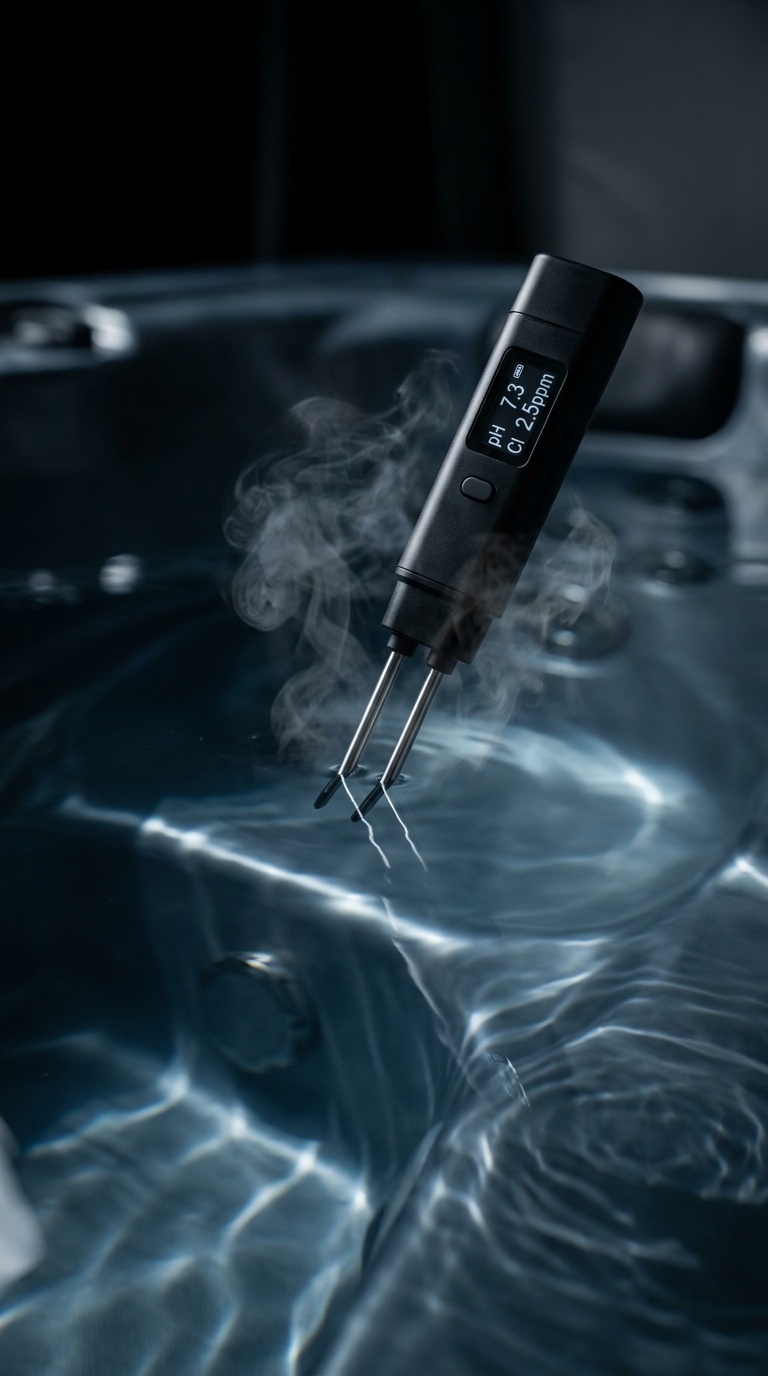
Every hot tub chemistry problem — cloudy water, foamy water, skin irritation, corroded equipment, unstable pH — begins the same way. Someone added a chemical without knowing what the water actually needed. They dosed blind, the chemistry shifted in the wrong direction, and the correction cycle started. The solution is not more chemicals. It is more data.
Water testing is not a secondary step in spa maintenance. It is the primary step. Every chemical decision — whether to add sanitizer, adjust pH, raise alkalinity, or shock the water — should be a response to a specific number returned by a test, not a response to how the water looks, smells, or feels. Visual and sensory cues tell you a problem already exists. A proper test tells you the problem is developing before it becomes visible — which is the only point at which chemistry is cheap, fast, and effective to correct.
This guide outlines the complete hot tub water testing protocol — what to test, when to test it, how to read the results, and the difference between a digital tester and test strips for different testing scenarios.
Phase 1: The Seven Parameters — What You Are Actually Measuring
A complete hot tub water test covers seven distinct parameters. Each one governs a specific aspect of water safety, comfort, or equipment protection. Understanding what you are measuring before you test is what allows you to act correctly on the results.
Free Chlorine / Bromine: Your active sanitizer level — the concentration of sanitizer currently available to kill biological contamination. This is the number that tells you whether your water is protected right now. Free chlorine or bromine below 1 ppm in a hot tub means the water is unprotected regardless of what you added last week. Target: 3 to 5 ppm.
Total Chlorine: The combined reading of both your free chlorine and your combined chlorine — the inactive chloramines formed when free chlorine reacts with organic bather waste. The gap between total chlorine and free chlorine is your combined chlorine reading. A widening gap is a direct indicator that the water needs to be shocked, not dosed with more sanitizer.
pH: The master variable that governs the effectiveness of every other chemical in the system. At pH above 7.8, free chlorine is largely inactive regardless of concentration. At pH below 7.2, water becomes corrosive to equipment and irritating to skin and eyes. Target: 7.4 to 7.6. This is the parameter you will adjust most frequently.
Total Alkalinity: The chemical buffer that stabilizes pH against rapid swings caused by bather load, rain, or chemical additions. Low alkalinity produces wildly unstable pH. High alkalinity makes pH resistant to correction. Target: 80 to 120 ppm. Alkalinity is adjusted before pH in every correction sequence.
Calcium Hardness: The mineral content of the water that determines whether it is aggressive or scaling. Water with low calcium hardness is aggressive — it pulls minerals from your tub's surfaces and equipment to satisfy its mineral demand, causing corrosion and pitting. Water with high calcium hardness deposits scale on surfaces, jets, and the heater element. Target: 150 to 250 ppm for most residential spas.
Cyanuric Acid (CYA): The stabilizer that protects free chlorine from UV degradation in outdoor spas. Without adequate CYA, direct sunlight destroys your free chlorine reading within hours of addition. Without knowing your CYA level, outdoor spa chlorine dosing decisions are built on an unknown variable. Target: 30 to 50 ppm for outdoor chlorine spas. Not applicable for bromine systems.
Bromine: Relevant for spas using bromine as the primary sanitizer. The bromine reading reflects your active sanitizer reserve and is the primary dosing indicator for a bromine maintenance system. Target: 3 to 5 ppm.
Phase 2: Digital Tester vs. Test Strips — When to Use Each
There are two testing instruments in a complete hot tub testing kit and they are not interchangeable. Each has a specific role in a well-managed water testing protocol.
The Digital Water Tester — Weekly Anchor Test: A digital tester reads all seven parameters simultaneously by analyzing the optical properties of a collected water sample against inserted test strips or a sensor probe. It eliminates the color-matching interpretation required by visual strip reading and returns an exact numerical value for each parameter. This is the instrument for your weekly anchor test — the primary data collection event that informs all chemistry decisions for the following seven days. Digital results are objective, repeatable, and not subject to the ambient lighting conditions, color perception differences, or strip freshness variables that affect visual strip interpretation.
The Test Strips — Mid-Week Spot Check: Test strips are the correct instrument for mid-week spot checks on one or two parameters — most commonly free chlorine and pH after a heavy use session. They deliver a fast result without the setup and rinse protocol required by the digital tester. Used correctly as a supplementary instrument rather than a primary testing method, test strips extend your testing frequency without adding significant time to your maintenance routine. Used as a replacement for digital testing, they introduce interpretation variables that degrade the accuracy of your chemistry decisions over time.
The professional protocol uses both instruments: digital tester for the weekly anchor test that drives all major chemistry adjustments, test strips for mid-week spot checks that confirm the water is holding between anchor tests.
Phase 3: The Sampling Protocol — How to Pull a Representative Sample
The accuracy of any water test is only as good as the sample it analyses. A sample pulled from the wrong location or at the wrong time will return readings that do not reflect the actual chemistry of the bulk water — leading to dosing decisions based on false data.
Sampling Location: Always pull your test sample from the center of the tub, at elbow depth — approximately 18 inches below the surface. Never sample near a return jet, skimmer intake, or the area where you last added a chemical. These locations have artificially elevated or depressed readings from the circulation system that do not reflect bulk water chemistry.
Sampling Time: Execute your weekly anchor test in the early morning before the sun has been on the water for more than an hour and before any bather use that day. UV exposure actively degrades free chlorine, meaning a midday sample will show artificially low chlorine readings and cause overdosing. Morning readings before use give you the most accurate picture of the water's baseline chemistry.
Post-Addition Wait Time: After adding any chemistry, always circulate the water for a minimum of 30 minutes before pulling a test sample to verify the result. Testing immediately after addition returns readings from a chemically uneven water column, not the balanced bulk water chemistry you are trying to measure.
The Sample Container: Use a clean, dry collection container — never test directly from your hand or a container that previously held chemicals. Residual chemistry in a contaminated container will corrupt your sample and return false readings that drive incorrect dosing decisions.
Phase 4: The Testing Cadence — Building Your Weekly Protocol
A testing protocol is only as useful as its consistency. Irregular testing produces irregular data, which produces irregular chemistry, which produces the unpredictable water quality most hot tub owners accept as normal rather than recognizing as a maintenance failure.
The Weekly Anchor Test: Execute a full seven-parameter digital test on the same day every week. This is your primary data collection event. Record every reading in a log — a physical notebook, a notes app, or a spreadsheet — before making any chemistry adjustment. The log is how you identify trends: a consistent alkalinity drift tells you something different than a sudden pH spike, and the difference in response is significant.
The Post-Use Spot Check: After any session with three or more bathers, execute a test strip spot check on free chlorine and pH within two hours of the session ending. Heavy bather load introduces significant organic material and can drive a meaningful chlorine drop within hours. A post-use spot check tells you whether a maintenance dose of sanitizer is needed before the next session, rather than discovering the deficit at the next morning's anchor test.
The Post-Rain Test: Rainfall dilutes cyanuric acid and alkalinity while introducing organic contamination. After any significant rain event, execute a full test regardless of where you are in your weekly cycle. Do not wait for the scheduled anchor test.
The Pre-Use Confirmation: Before any planned use where the tub has been idle for more than three days, execute a quick test strip check on free chlorine and pH to confirm the water is within range before bathers enter. This takes 90 seconds and eliminates the risk of anyone entering water that has drifted out of the safe operating range between maintenance intervals.
The Expert Gear List
To execute a complete hot tub water testing protocol with professional-grade accuracy, our team deploys the following instruments. All items are available on Amazon.
Disclosure: The Retrofit Routine is a participant in the Amazon Services LLC Associates Program. As an Amazon Associate, we earn from qualifying purchases at no additional cost to you.
Digital Testing System
Eagle Ray Digital Spa Water Test Kit by AquaDoc: The exact digital testing system this protocol is built around. It reads all seven critical spa water parameters — Free Chlorine, Total Chlorine, Bromine, Total Hardness, Cyanuric Acid, Total Alkalinity, and pH — simultaneously from a single water sample. Comes with 30 hot tub test strips. The digital readout eliminates the color-matching guesswork of visual strip interpretation and returns exact numerical values for every parameter. At $174.99 this instrument replaces years of pool store testing fees and reactive chemistry guessing with precise, actionable data every single week. The highest-value single investment in any hot tub maintenance system.
Test Strips
AquaDoc 7-in-1 Spa & Hot Tub Test Strips - 100 Strips: The correct supplementary instrument for mid-week spot checks between anchor tests. Tests the same seven critical parameters as the digital kit — Total Chlorine, Free Chlorine, Total Hardness, Cyanuric Acid, Total Alkalinity, Bromine, and pH — in a fast-result format designed for quick post-use and pre-entry checks.
Also Available in 200-strip pack option depending on your testing frequency.
Contact
Questions? Reach out anytime, we’re here.
© 2026. All rights reserved.
Disclosure
The Retrofit Routine is a participant in the Amazon Services LLC Associates Program. As an Amazon Associate, we earn from qualifying purchases at no additional cost to you.
The Retrofit Routine is a digital property owned and operated by Atlantic Delivery Drivers Corp.