
The Inflatable Hot Tub Startup Protocol: First Fill Chemistry & Water Balance
Stop guessing with your first fill. Get the exact chemical staging sequence to establish safe, balanced water in your inflatable hot tub from day one — before a single person gets in.
THE ROUTINE
6 min read
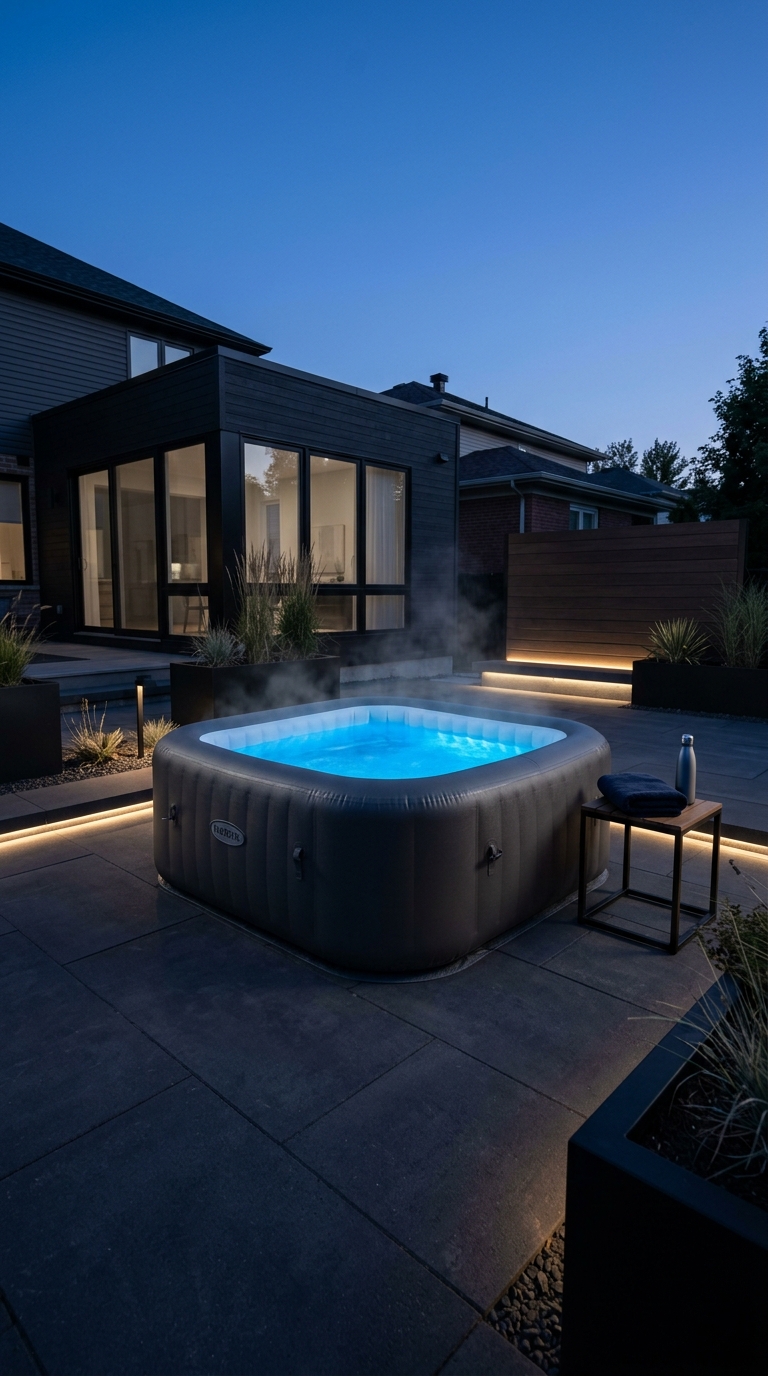
You just unboxed an inflatable hot tub. The pump is running, the tub is filling, and you have a collection of chemical bottles in front of you with no clear instruction on what goes in first, how much, or why. This is the exact moment most new inflatable spa owners make their first and most expensive mistake — dumping chemicals in without a system, producing water that is either corrosively aggressive or biologically unsafe, and spending the next two weeks chasing balance instead of enjoying the investment.
An inflatable hot tub is not a bathtub you refill after every use. It is a recirculating water system that you manage chemically over weeks and months. The water in your spa interacts with every surface it touches — the vinyl liner, the jets, the heating element, and every person who enters it. Getting the chemistry wrong in the first 24 hours does not just make the water uncomfortable. It accelerates liner degradation, corrodes the internal pump components, and creates the biological conditions that produce the cloudy, foamy, odorous water that leads most owners to drain and give up entirely.
This guide is the exact first-fill chemical staging protocol our team uses to establish a clean, balanced, and protected water environment from the first hour of operation.
Phase 1: Pre-Chemical Diagnostics — Know Before You Dose
The single most common inflatable hot tub mistake is adding chemicals to water you have not tested. Your tap water already has a pH, an alkalinity level, and a hardness level before a single chemical touches it. In some regions tap water comes in at pH 8.2 with high alkalinity. In others it arrives at pH 6.8 with near-zero hardness. Dosing without knowing your baseline means you are either doubling down on an existing imbalance or working against yourself before you start.
The Baseline Test: Before adding any chemistry, fill the tub to the operating waterline and allow the pump to circulate for 30 minutes. This distributes the water evenly and stabilizes the temperature reading. Then execute a full parameter test using either your digital tester or your 7-in-1 test strips. Record every reading before opening a single bottle.
Your Target Parameters at First Fill:
pH: 7.4 to 7.6
Total Alkalinity: 80 to 120 ppm
Calcium Hardness: 150 to 250 ppm (inflatable spas run lower than hard-shell tubs to protect the vinyl liner)
Sanitizer (Chlorine or Bromine): 0 ppm at this stage — added last
The Sequence Rule: Chemistry always goes in in this exact order — Alkalinity first, pH second, Calcium Hardness third, Sanitizer last. Every time. If you add sanitizer before stabilizing the pH, you are destroying the effectiveness of the sanitizer before it ever gets a chance to work.
Phase 2: The Foundation — Alkalinity and pH Stabilization
Total alkalinity is not the same as pH. It is the chemical buffer that prevents your pH from swinging wildly in response to bather load, rain, or chemical additions. Without adequate alkalinity, your pH becomes unstable — spiking up after heavy use and crashing down after chemical additions. This instability is what causes skin and eye irritation, liner bleaching, and equipment corrosion. Lock down alkalinity first and the pH almost manages itself.
Alkalinity Correction: If your baseline test shows alkalinity below 80 ppm, add an alkalinity increaser in small increments, circulating for 30 minutes between doses and retesting before adding more. Never dump the entire calculated dose at once — alkalinity raises quickly in a small-volume inflatable spa and overshooting forces a full drain to correct.
pH Correction: Once alkalinity is within range, test pH. Most tap water in North America comes in slightly alkaline, meaning you are more likely to need pH decreaser than increaser on a first fill. Add pH adjusters in small doses with 20-minute circulation intervals between each addition. The target is 7.4 to 7.6 — not 7.0, not 7.8. This narrow window is where sanitizer works at maximum efficiency and where the water is gentlest on your liner, equipment, and bathers.
The Patience Protocol: Do not rush the foundation phase. Stable alkalinity and correct pH are worth more than sanitizer. A hot tub with perfect chlorine levels but pH at 8.4 is not protecting anyone — the chlorine is largely inactive above pH 7.8. The chemistry has to be right before the sanitizer goes in.
Phase 3: Sanitizer Deployment — Chlorine vs. Bromine System Selection
Inflatable hot tubs can be maintained with either a chlorine or a bromine sanitizer system. The choice is not arbitrary — the two systems have fundamentally different chemistries, different maintenance requirements, and different performance characteristics in the high-heat, high-bather-load environment of a spa.
The Chlorine System: Chlorine granules dissolve quickly, bring sanitizer levels up fast, and are easy to shock with. They are the best choice for households that use the spa frequently, because the rapid kill time keeps up with heavy bather load. Chlorine levels dissipate faster in hot water and under UV exposure, which means more frequent dosing — typically every 2 to 3 days for a high-use tub. The target maintenance level is 3 to 5 ppm for a hot tub, which runs higher than a pool because of the elevated water temperature.
The Bromine System: Bromine is more stable at high temperatures than chlorine, making it the preferred system for spas that maintain water above 100°F. It also has a lower odor profile — the characteristic chemical smell associated with hot tubs is not bromine itself but the byproducts of chlorine reacting with organic material. Bromine is gentler on skin and eyes at the required operating concentration. The tradeoff is that you cannot shock a bromine spa with non-chlorine oxidizer alone — you need to maintain a bromine reserve using sodium bromide before activating it with a shock treatment.
The First Dose — Chlorine System: Add the chlorine granules to the water with the jets running at the dosage specified on your starter kit for your tub's water volume. Do not add granules directly to the skimmer or filter housing — dissolve them in a cup of warm water first and distribute around the perimeter of the tub. Allow full circulation for one hour before testing. Target: 3 to 5 ppm free chlorine. Do not enter the water until the level reads within range and pH remains stable.
The First Dose — Bromine System: Establish the bromine reserve first by adding sodium bromide at the rated dose for your water volume. This does not sanitize the water — it creates the chemical reserve that bromine shock will activate. Allow 30 minutes of circulation, then add the bromine tablets to the floating dispenser or dedicated filter housing. Add the initial activation shock dose. Allow 2 hours before testing. Target: 3 to 5 ppm bromine.
Phase 4: The Maintenance Cadence — Protecting the First-Fill Investment
A well-balanced first fill can hold stable for weeks with the correct maintenance routine. A poorly managed first fill forces a full drain and restart within days.
The 48-Hour Retest: After the initial startup, execute a full parameter test at the 48-hour mark. The water will have shifted as it equilibrates to the operating temperature and bather load. This is your first real data point on how your specific tap water and usage pattern affects chemistry, and it dictates your ongoing dosing frequency.
The Weekly Protocol: Test all parameters once per week at minimum. Top up sanitizer every 2 to 3 days or after heavy use sessions. After every use by three or more bathers, add a maintenance dose of sanitizer to compensate for the organic load introduced. Shock the water weekly with a non-chlorine oxidizer to break down the chloramines and bromamines that accumulate from bather waste — this is what eliminates the chemical odor that most people mistakenly blame on over-chlorination.
The Drain Schedule: Even with perfect chemistry, inflatable hot tub water requires a full drain and refill every 90 days. Total dissolved solids accumulate over time and eventually make the water impossible to balance regardless of chemical additions. Mark it in the calendar. A clean restart with a properly executed first-fill protocol takes less than two hours.
The Expert Gear List
To execute this inflatable hot tub startup protocol, our team deploys the following professional-grade chemistry kits. All items are available on Amazon.
Disclosure: The Retrofit Routine is a participant in the Amazon Services LLC Associates Program. As an Amazon Associate, we earn from qualifying purchases at no additional cost to you.
Chlorine System
AquaDoc Inflatable Hot Tub Chemical Kit With Chlorine: A complete chlorine-based startup kit engineered specifically for inflatable spas and small-volume hot tubs. Includes every chemical required for the full first-fill protocol — chlorine sanitizer, pH balancer, alkalinity control, and test strips — packaged at the correct dosing volumes for inflatable tub water capacity. The most efficient entry point for new inflatable spa owners who want a single-source chemistry system without piecing together individual bottles.
Bromine System
AquaDoc Inflatable Hot Tub Chemical Kit with Bromine Tablets: The bromine-based alternative for spa owners prioritizing gentler water chemistry and lower odor output. Contains bromine tablets, sodium bromide reserve builder, pH control, alkalinity increaser, and test strips in a complete startup kit. Recommended for households with sensitive skin or spas that maintain higher operating temperatures above 100°F where bromine's thermal stability outperforms chlorine.
Contact
Questions? Reach out anytime, we’re here.
© 2026. All rights reserved.
Disclosure
The Retrofit Routine is a participant in the Amazon Services LLC Associates Program. As an Amazon Associate, we earn from qualifying purchases at no additional cost to you.
The Retrofit Routine is a digital property owned and operated by Atlantic Delivery Drivers Corp.