
The Pool Algae Elimination Protocol: Phosphate Removal, Algaecide Deployment, and the Prevention System That Keeps Algae From Coming Back
Green pool water is not a chlorine problem — it is a phosphate and biological control problem. Get the exact phosphate removal, copper algaecide deployment, and sanitizer restoration sequence that eliminates algae at the source and prevents it from returning through the full swimming season.
THE ROUTINE
8 min read
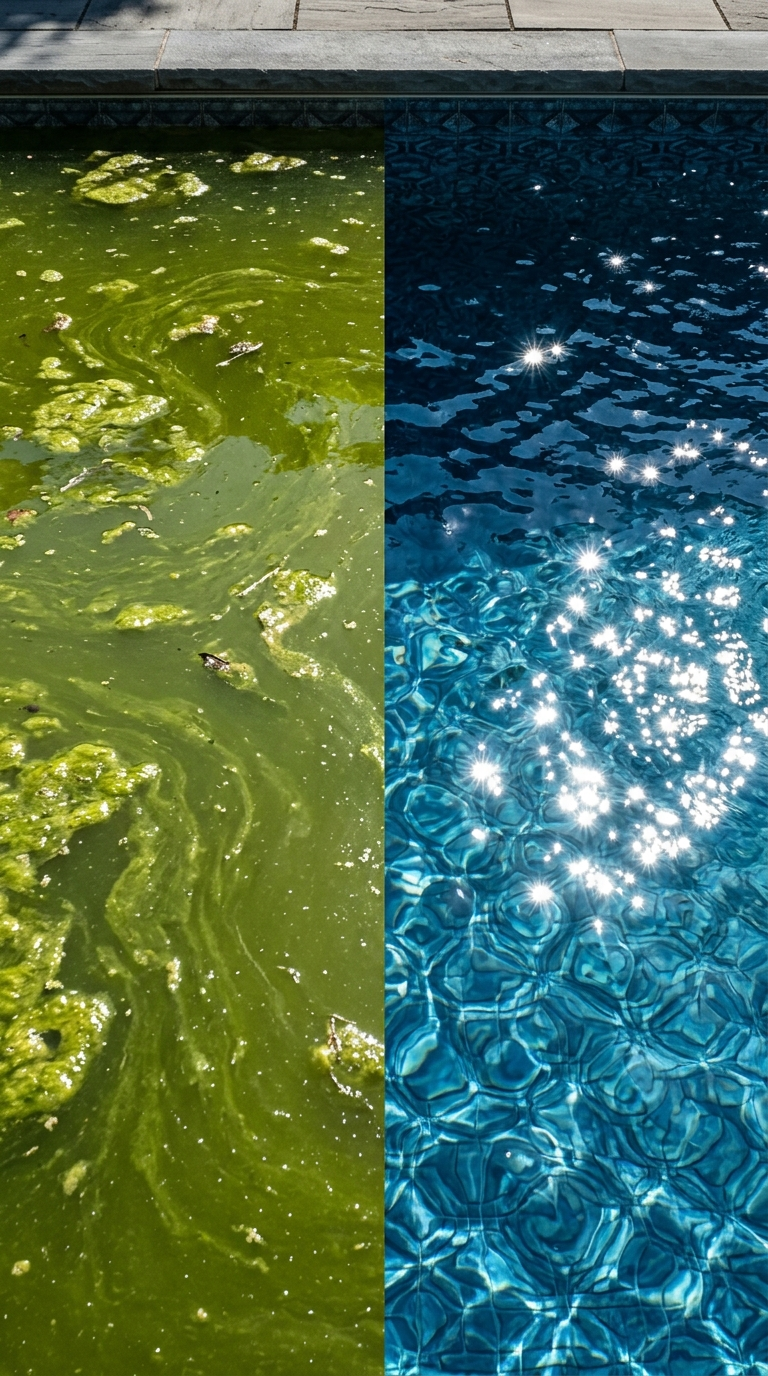
Green pool water is the single most psychologically defeating problem in residential pool management. The pool that was crystal clear on Friday is visibly green by Sunday morning. Shock is added. The pool turns slightly clearer for 24 hours. Then the green returns. More shock is added. Clarifier is added. The pool store recommends a triple shock and a three-day filter cycle. Two weeks and $200 later the water is finally clear — until the next algae event three weeks after that.
This cycle repeats because shocking a green pool treats the symptom without addressing the cause. Chlorine kills existing algae. It does nothing to remove the phosphates — the primary biological fuel source that allows algae to establish, grow, and recolonize your pool within days of every shock treatment. A pool with elevated phosphate levels is a pool with a permanent algae invitation regardless of how aggressively it is sanitized. The algae will return every time the sanitizer level dips because the food source that drives explosive growth is sitting in the water at concentrations that guarantee recolonization.
Permanent algae elimination requires two simultaneous actions: removing the phosphate fuel supply that sustains algae growth, and deploying a residual algaecide that provides ongoing biological protection between sanitizer treatments. This guide is the complete two-phase algae elimination and prevention protocol — the phosphate audit, the removal treatment, the copper algaecide deployment sequence, and the maintenance cadence that keeps your pool algae-free through the full swimming season without the recurring shock cycle.
Phase 1: The Phosphate Audit — Understanding Why Your Pool Keeps Going Green
Before any algaecide is deployed, understanding the phosphate load in your water is what separates a permanent solution from another temporary shock treatment. Phosphates enter pool water from multiple sources that most owners never consider — and they accumulate silently until the concentration crosses the threshold where algae can sustain explosive growth even against adequate sanitizer levels.
Where Phosphates Come From: The primary phosphate sources in a residential pool are environmental rather than chemical. Decaying leaves and organic debris introduce phosphates directly into the water column as they decompose. Rainwater carries dissolved phosphates from atmospheric fallout, fertilizer runoff, and organic material. Lawn fertilizer — particularly any phosphate-containing fertilizer applied near the pool — contributes significantly to pool phosphate levels through splash and runoff during irrigation. Swimmer waste including sweat and sunscreen contains phosphate compounds. Even some pool chemicals, particularly certain algaecides and pH adjusters, contain phosphates that accumulate with repeated use. A pool that sits beneath overhanging trees, receives direct irrigation runoff, or is heavily used by multiple swimmers is accumulating phosphates continuously regardless of how well the chemistry is managed.
The Phosphate Threshold: Algae growth is significantly suppressed at phosphate levels below 200 parts per billion. At levels above 500 ppb, algae has adequate fuel to sustain growth even against chlorine levels in the correct maintenance range — meaning you can have correct free chlorine and still experience algae blooms because the phosphate concentration exceeds the sanitizer's ability to suppress the biological fuel load. At levels above 1000 ppb the pool is essentially an algae cultivation environment and no practical sanitizer level will prevent recurring blooms without first addressing the phosphate concentration.
The Phosphate Test: Standard 7-in-1 test strips do not measure phosphates. A dedicated phosphate test strip or a pool store phosphate test is required to establish your baseline before treatment. If you are experiencing recurring algae events despite maintaining correct sanitizer levels, assume elevated phosphates and treat accordingly — the phosphate remover is safe to apply even at low phosphate levels and the treatment cost is negligible relative to the ongoing shock and chemical expense of the uncorrected algae cycle.
Phase 2: The Phosphate Removal Protocol — Eliminating the Algae Fuel Supply
Phosphate removal is a one-time reset treatment executed when phosphate levels are confirmed elevated, combined with a maintenance dosing schedule that prevents phosphates from accumulating back to the threshold level between seasonal treatments.
Pre-Treatment Preparation: Before adding the phosphate remover, clean or backwash the filter to ensure maximum filtration capacity is available during the treatment cycle. A phosphate remover works by binding dissolved phosphate molecules into larger particles that the filter can then capture and remove from the water. A dirty or partially clogged filter significantly reduces the efficiency of the removal cycle and may require a second treatment to achieve the full phosphate reduction the product is capable of in a single pass.
The Phosphate Remover Application: Add the phosphate remover at the dose specified for your pool volume and current phosphate level with the pump running. The product will immediately begin producing a white, milky cloudiness in the water — this is the phosphate binding reaction occurring visually and is confirmation that the chemistry is working. This cloudiness is temporary and will clear as the filter captures the bound phosphate particles over the following 24 to 48 hours. Do not be alarmed by the temporary cloudiness and do not add clarifier during this period — the clarifier will interfere with the phosphate binding process.
The Filter Cycle: Run the pump continuously for 48 hours following the phosphate remover application. Clean or backwash the filter at the 24-hour mark to clear the accumulated phosphate particles from the media and restore full filtration capacity for the second 24 hours of the treatment cycle. After 48 hours, retest phosphate levels. If levels remain above 200 ppb, a second half-dose treatment is indicated. Most single treatments in standard residential pools will achieve the sub-200 ppb threshold in a single 48-hour cycle at normal phosphate loading levels.
The Maintenance Dose: Once the initial phosphate reduction is achieved, a maintenance dose of phosphate remover applied monthly through the swimming season prevents phosphate levels from accumulating back to the algae-sustaining threshold. Monthly treatment at the maintenance dose rate specified on the product is significantly more cost-effective than the repeated shock treatments and chemical corrections that uncontrolled phosphate accumulation drives.
Phase 3: The Algaecide Deployment — Residual Biological Protection
With phosphates removed from the water column, the algaecide provides the residual biological protection that prevents algae from establishing between sanitizer treatments and creates a continuous barrier against the algae species that survive shock treatment.
Understanding Copper Algaecide: A copper-based pool algaecide works through a fundamentally different mechanism than chlorine sanitizer. Chlorine kills algae through oxidative destruction — it chemically destroys algae cells on contact but is consumed in the process and leaves no residual protection once the concentration drops. Copper algaecide works through metallic ion toxicity — dissolved copper ions in the water column are continuously toxic to algae at concentrations that are safe for swimmers, and unlike chlorine they are not consumed through normal use or UV exposure. A properly dosed copper algaecide maintains its protective concentration for weeks between applications rather than hours or days, providing a persistent biological barrier that chlorine cannot.
The Three Algae Types: The copper algaecide in this protocol is specifically effective across the three algae species that residential pools encounter. Green algae is the most common — the rapid-blooming, free-floating species that turns pool water green within 24 to 48 hours of sanitizer failure and responds relatively quickly to shock treatment. Mustard algae is the yellow-brown species that clings to pool walls and floor surfaces, is chlorine-resistant compared to green algae, and frequently returns to the same locations because it forms spores that survive on pool equipment, toys, and swimwear between treatments. Black algae is the most treatment-resistant species — it forms deep-rooted colonies on plaster and grout surfaces with a protective outer layer that standard shock concentrations cannot penetrate. A 90-day copper algaecide provides effective residual suppression against all three species between applications.
The Initial Treatment Dose: Add the copper algaecide at the initial treatment dose specified for your pool volume with the pump running in the evening after the sun has been off the pool. Copper algaecide is not UV-sensitive the way chlorine is, but evening application allows the product to distribute evenly through the water column overnight with no swimmer disturbance. Do not add the algaecide within 24 hours of a shock treatment — the elevated chlorine level from a recent shock can interact with the copper formulation and reduce its effectiveness. Allow at least 24 hours between any shock treatment and the algaecide application.
The Compatibility Check: Confirm your pool does not use a biguanide sanitizer system such as Baquacil or SoftSwim before applying a copper algaecide — copper-based products are incompatible with biguanide chemistry and will produce a black precipitate that is difficult to remove from pool surfaces. Chlorine, bromine, and saltwater chlorine generation systems are all fully compatible with copper algaecide.
The 90-Day Residual and Maintenance Dosing: The copper algaecide provides up to 90 days of residual protection in a single application. Apply a maintenance dose at the 90-day mark through the swimming season, and apply a fresh treatment at pool opening each spring before the first significant use. In pools that experience recurring algae events despite correct sanitizer management, apply every 60 days rather than 90 to maintain a higher residual copper ion concentration through the peak bather-load months.
Phase 4: The Active Algae Recovery Protocol — When the Pool Is Already Green
If the pool is already visibly green when this protocol is executed, the phosphate removal and algaecide deployment sequence requires one additional step before and after the standard treatment.
The Pre-Treatment Shock: Shock the pool to the break-point chlorination level specified for algae treatment — typically 3 to 5 times the standard maintenance dose depending on the severity of the bloom — before beginning the phosphate removal sequence. This initial shock kills the active algae bloom and converts the green biological mass to a dead particle load that the phosphate remover and subsequent filtration cycle can then address. Allow 24 hours after the shock before adding the phosphate remover to allow the chlorine level to return toward the normal maintenance range.
The Filter Management: During active algae recovery the filter will load rapidly with dead algae particles, killed biological material, and the bound phosphate particles from the removal treatment simultaneously. Check and clean or backwash the filter every 12 hours during the recovery period rather than the standard 24-hour interval. A filter operating at reduced capacity during active algae recovery extends the clearing time significantly and can allow dead algae particles to pass back through the filter media into the water.
The Brush Protocol: For mustard and black algae that have established surface colonies on pool walls and floor, physical brushing of the affected surfaces must precede and accompany the chemical treatment. Use a stiff pool brush to aggressively scrub the affected surfaces immediately after the initial shock dose while the chlorine level is at its highest — this breaks the protective outer layer of the algae colony and exposes the interior to the oxidative action of the elevated chlorine concentration. Brush the affected surfaces again 24 hours after the phosphate remover has been added and again 24 hours after the algaecide application. The combination of mechanical disruption, phosphate removal, and copper ion penetration is the only reliable treatment protocol for established mustard and black algae colonies.
The Expert Gear List
To execute this complete pool algae elimination and prevention protocol, our team deploys the following products. All items are available on Amazon.
Disclosure: The Retrofit Routine is a participant in the Amazon Services LLC Associates Program. As an Amazon Associate, we earn from qualifying purchases at no additional cost to you.
Phosphate Control
AquaDoc Pool Phosphate Remover — 32oz, 64oz: A fast-acting, maximum-strength phosphate removal formula engineered to bind and eliminate the dissolved phosphates that serve as the primary biological fuel source for pool algae growth. Removes phosphates that accumulate from organic debris, rainwater runoff, fertilizer splash, and swimmer waste — the sources that maintain the sub-threshold algae invitation in pools experiencing recurring blooms despite correct sanitizer management. Apply at opening to establish a clean phosphate baseline, then monthly through the season as a maintenance dose. Compatible with all pool types.
Algae Elimination and Prevention
AquaDoc Copper Pool Algaecide — 32oz, 64oz, 128oz: A professional-strength copper-based algaecide providing up to 90 days of residual protection against green, mustard, and black algae in residential pools. The copper ion formula maintains continuous biological toxicity to algae at swimmer-safe concentrations — providing residual protection that chlorine alone cannot deliver between sanitizer treatments. Apply at pool opening, after any algae recovery treatment, and every 60 to 90 days through the swimming season. Compatible with chlorine, bromine, and saltwater chlorine generation systems.
Contact
Questions? Reach out anytime, we’re here.
© 2026. All rights reserved.
Disclosure
The Retrofit Routine is a participant in the Amazon Services LLC Associates Program. As an Amazon Associate, we earn from qualifying purchases at no additional cost to you.
The Retrofit Routine is a digital property owned and operated by Atlantic Delivery Drivers Corp.